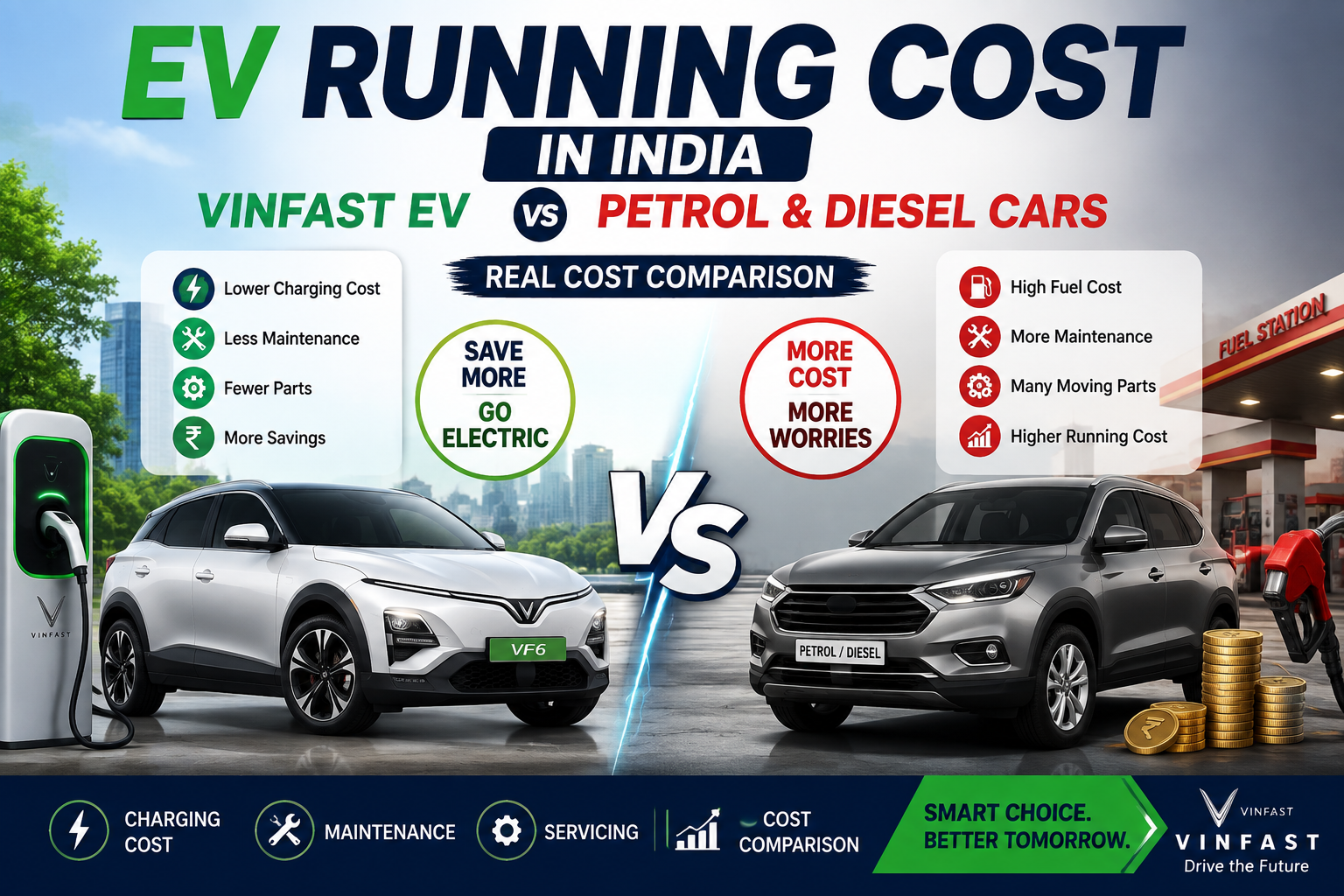
Electric SUV vs Petrol SUV: Which One Should You Buy in India?
Introduction
The
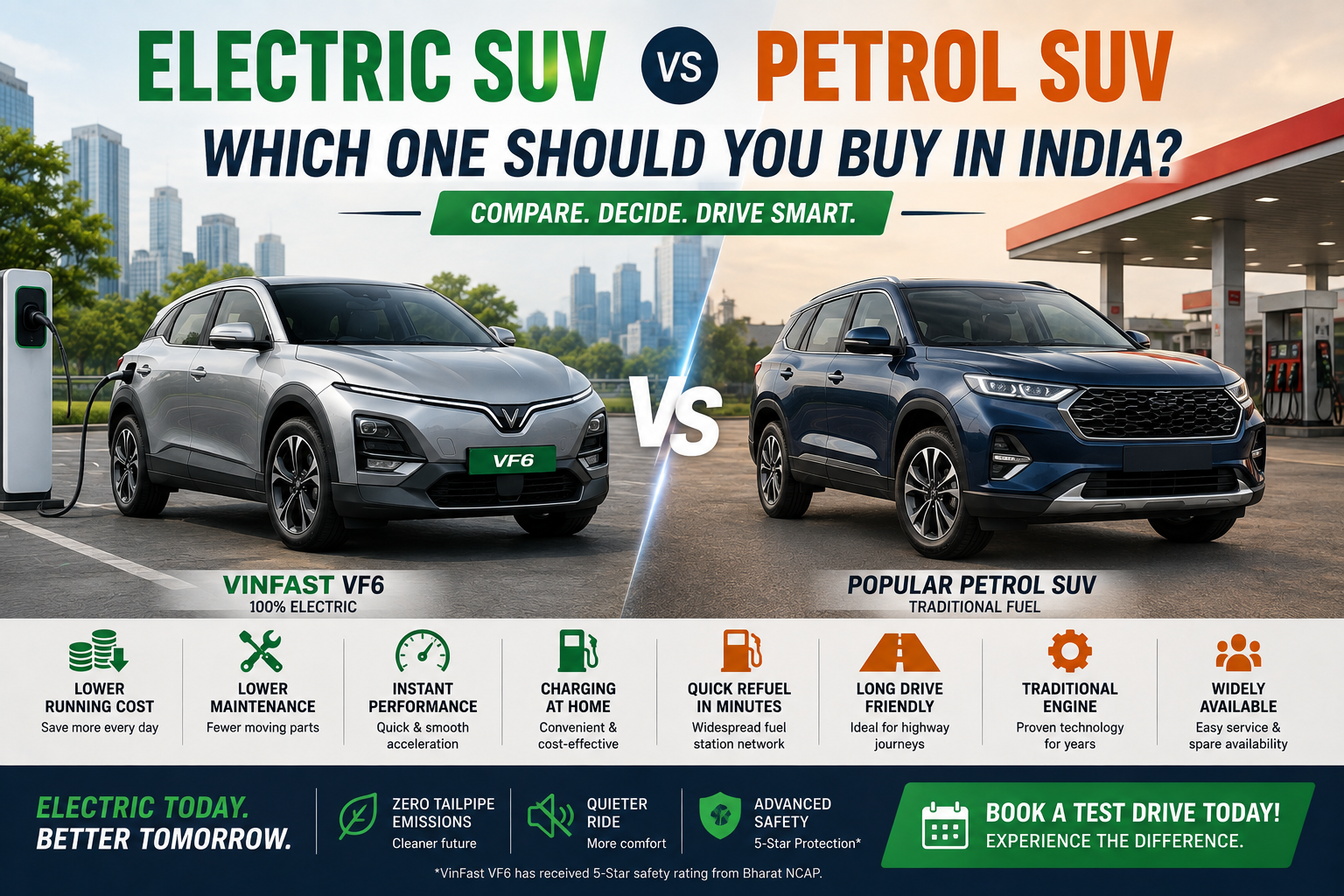
electric SUV vs petrol SUV debate is becoming more important for Indian car buyers. Electric vehicles are gaining attention because of their quiet performance, technology, and potential for lower running costs. At the same time, petrol SUVs remain popular because refuelling is familiar and fuel stations are widely available.
So, which option is better for you?
The answer depends on your daily driving distance, charging access, travel requirements, budget, and personal preferences. An electric SUV can be an excellent choice for regular city driving, while a petrol SUV may still appeal to buyers who frequently travel long distances without planned charging stops.
In this guide, we’ll compare
electric SUVs and petrol SUVs across running costs, maintenance, performance, charging, refuelling, comfort, technology, safety, and everyday practicality.
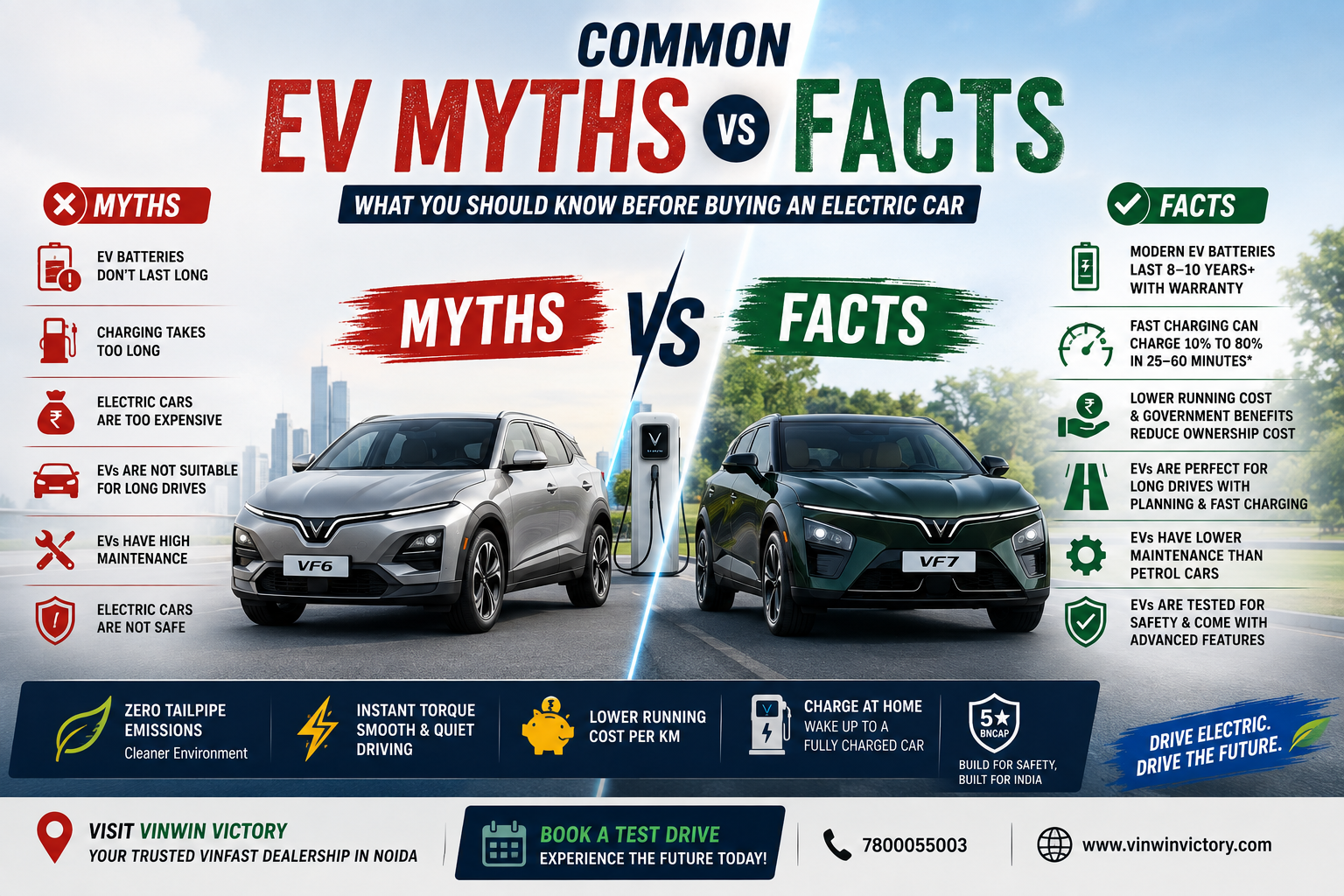
We’ll also look at the VinFast VF6 and VF7 to understand why they can be interesting options for Indian buyers considering an electric SUV.
Electric SUV vs Petrol SUV: What’s the Difference?
The biggest difference is the powertrain.
An electric SUV uses a battery-powered electric motor. A petrol SUV uses an internal combustion engine that runs on petrol.
Because the two systems work differently, the ownership experience is also different.
An electric SUV typically offers:
- Electric motor performance
- Battery-based energy storage
- Home charging capability
- Regenerative braking
- Quiet operation
- Fewer conventional powertrain components
Meanwhile, a petrol SUV offers:
- Petrol-powered engine
- Quick refuelling
- Extensive fuel station availability
- Familiar ownership experience
- Easy long-distance refuelling
Therefore, the better choice depends on how and where you drive.
1. Running Cost: Electric SUV vs Petrol SUV
Running cost is one of the biggest reasons buyers compare electric and petrol SUVs.
A petrol SUV requires regular fuel purchases. Your monthly expense depends on the distance you drive, the vehicle’s fuel efficiency, petrol prices, traffic conditions, and driving style.
An electric SUV uses electricity instead. If you have convenient access to home charging, you can recharge the vehicle while it is parked.
As a result, EV owners can potentially reduce their everyday energy expense compared with a petrol vehicle. However, the actual saving depends on electricity tariffs, charging efficiency, vehicle efficiency, and usage.
What affects your monthly cost?
Consider these factors:
- Daily driving distance
- Electricity tariff
- Petrol price
- Vehicle efficiency
- Home charging availability
- Public charging usage
- Driving conditions
For someone who drives long distances every day, these differences can become more noticeable over time.
2. Charging vs Refuelling
Charging is one of the most noticeable differences between an EV and a petrol SUV.
A petrol SUV can usually be refuelled within a few minutes at a fuel station. An electric SUV takes longer because charging depends on the charger and battery.
However, EV owners have one major convenience:
home charging.
Instead of making a separate trip to a fuel station, you can connect your electric SUV when you return home. Overnight charging can then prepare the vehicle for your next day’s commute.
Petrol SUV
- Visit a fuel station
- Refuel when the tank is low
- Quick refuelling
- Extensive fuel station network
Electric SUV
- Charge at home when available
- Use public charging during longer journeys
- Overnight charging can suit daily commuting
- DC fast charging can reduce charging time
Therefore, charging is not necessarily difficult. It simply requires a different routine.
3. Home Charging Advantage
For many EV owners, home charging is one of the biggest benefits of electric mobility.
Imagine returning home after work and plugging in your SUV. While the vehicle is parked overnight, it can recharge without requiring a separate trip.
This can be especially convenient for:
- Daily office commuters
- City drivers
- Families with fixed travel routines
- People with dedicated parking
- Buyers who have access to suitable home charging
On the other hand, buyers without convenient charging access should consider their charging options before choosing an EV.
Therefore,
home charging availability should be one of the first questions you ask yourself before buying an electric SUV.
4. Performance and Driving Experience
Electric SUVs provide a different driving experience from petrol SUVs.
An electric motor can deliver torque immediately. As a result, acceleration feels smooth and responsive.
Electric vehicles are also generally quieter because there is no conventional engine operating in the same way as a petrol powertrain.
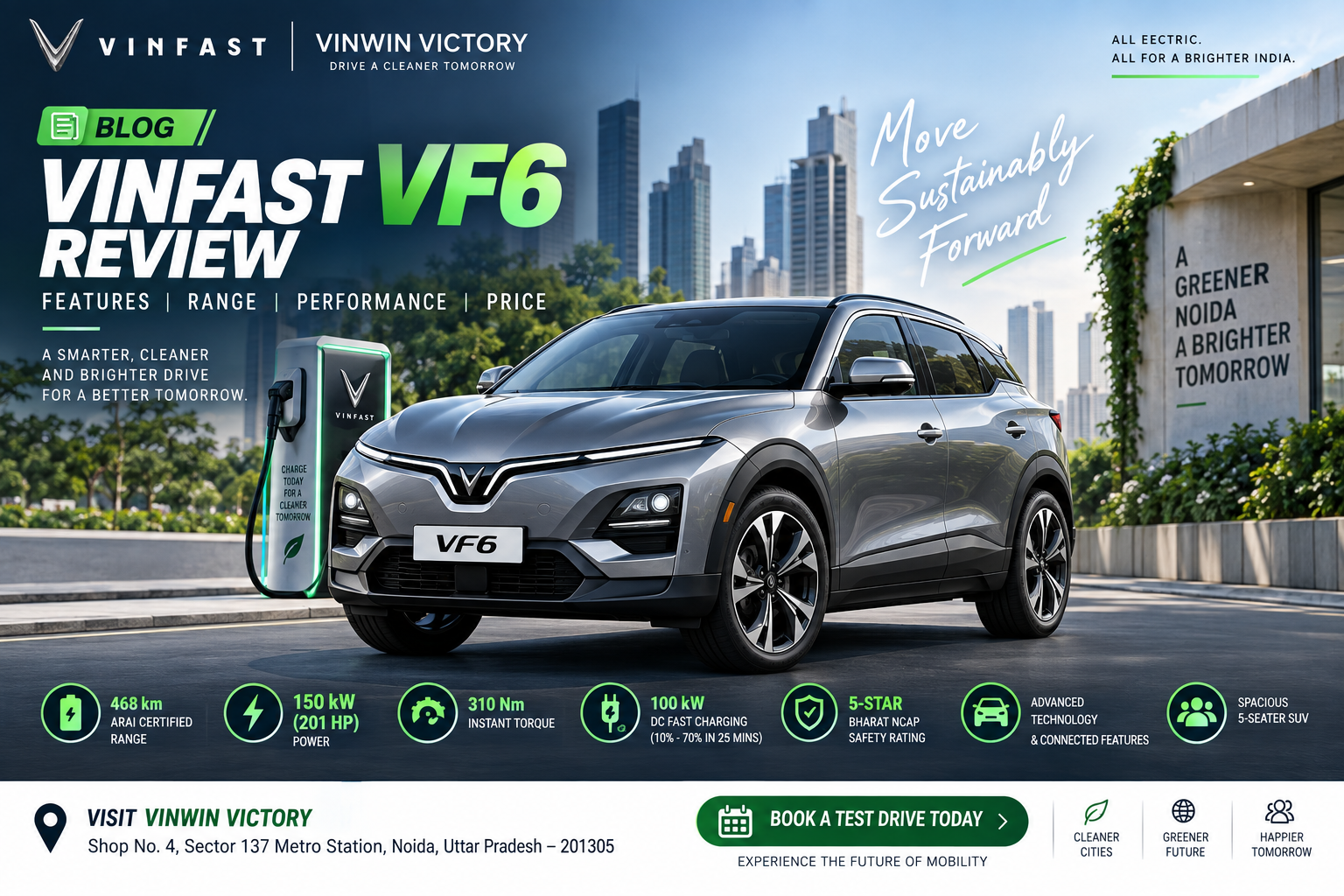
The VinFast VF6, for example, is available with up to
150 kW of peak power and 310 Nm of peak torque, while the VF7 is available with configurations reaching
260 kW and 500 Nm in its AWD setup.
For buyers who enjoy smooth acceleration and quiet driving, an electric SUV can therefore offer a very appealing experience.
5. Electric SUV vs Petrol SUV for City Driving
For city driving, an electric SUV can be particularly convenient.
Urban traffic often involves frequent stops, starts, and slow-moving conditions. An EV’s smooth acceleration and quiet operation can make these situations more comfortable.
In addition, regenerative braking can help recover some energy during deceleration, depending on the vehicle and driving conditions.
The compact dimensions of the VinFast VF6 can also make it an interesting option for buyers looking for a premium electric SUV for everyday city use. The current VF6 has a 4,241 mm length, 1,834 mm width, and 190 mm ground clearance.
For larger families or buyers who prefer a more spacious SUV, the VF7 offers a larger footprint with a 4,550 mm length and 2,840 mm wheelbase.
6. What About Long-Distance Travel?
Long-distance driving requires a little more planning in an electric SUV.
With a petrol SUV, you can generally refuel quickly whenever you find a fuel station. With an EV, you need to consider charging locations and charging time.
However, modern EVs are increasingly capable of long-distance travel.
The VinFast VF6 currently offers an ARAI-certified range of up to
468 km, while the VF7 range varies by configuration, with the current official specifications listing figures up to
532 km for the applicable version.
Before a long trip, you should:
- Check your battery level
- Plan charging stops
- Check charger availability
- Confirm charger compatibility
- Allow time for charging
- Consider traffic and weather conditions
With proper planning, an electric SUV can be used for city travel as well as longer journeys.
7. Charging Speed Matters
Not every EV charger provides the same charging speed.
Home AC charging is usually suited to overnight use. Public DC fast charging, meanwhile, is designed for quicker charging during longer journeys.
The VinFast VF6 supports DC charging up to
100 kW and can fast charge from 10% to 70% in approximately
25 minutes under the specified conditions. The VF7 supports up to
100 kW or 110 kW DC charging depending on configuration, with published 10%–70% charging times of approximately 24 to 28 minutes.
Therefore, buyers should look at both range and charging capability rather than considering range alone.
8. Maintenance: Electric SUV vs Petrol SUV
Maintenance is another important difference.
A petrol SUV has a conventional engine and associated mechanical systems. Routine maintenance can include engine-related service items and other components specific to an internal combustion powertrain.
An electric SUV has a different powertrain architecture. It does not use a conventional petrol engine, which means some traditional engine-related maintenance requirements do not apply.
However, an EV is
not maintenance-free.
Owners still need to maintain:
- Tyres
- Brakes
- Suspension
- Air conditioning
- Filters
- Electrical systems
- Software
- Battery systems
Therefore, you should always follow the manufacturer’s recommended service schedule.
9. Comfort and Noise
Comfort is another area where electric SUVs can stand apart.
Because an EV does not use a conventional petrol engine, cabin operation can feel quieter and smoother. This can be especially noticeable in city traffic.
The VinFast VF6 and VF7 also focus on comfort through features such as dual-zone air conditioning, powered driver seating, premium interior materials, and connected technology, depending on variant.
As a result, an electric SUV can provide a refined experience for both daily commuting and family travel.
10. Technology and Features
Modern SUVs are no longer judged only by engine performance.
Buyers increasingly look for:
- Large infotainment screens
- Connected car technology
- Digital displays
- Driver assistance
- Camera systems
- Smart lighting
- Wireless smartphone connectivity
- Premium comfort features
The VinFast VF6 and VF7 are equipped with a
12.9-inch infotainment screen, connected-car technology, coloured HUD, and Level 2 ADAS on applicable variants.
Therefore, technology can be another important advantage for buyers moving from a conventional SUV to an EV.
11. Safety: Electric SUV vs Petrol SUV
Safety should never be ignored when comparing vehicles.
Both electric and petrol SUVs can offer advanced safety equipment. Therefore, the actual safety package should be evaluated model by model rather than simply comparing the powertrain.
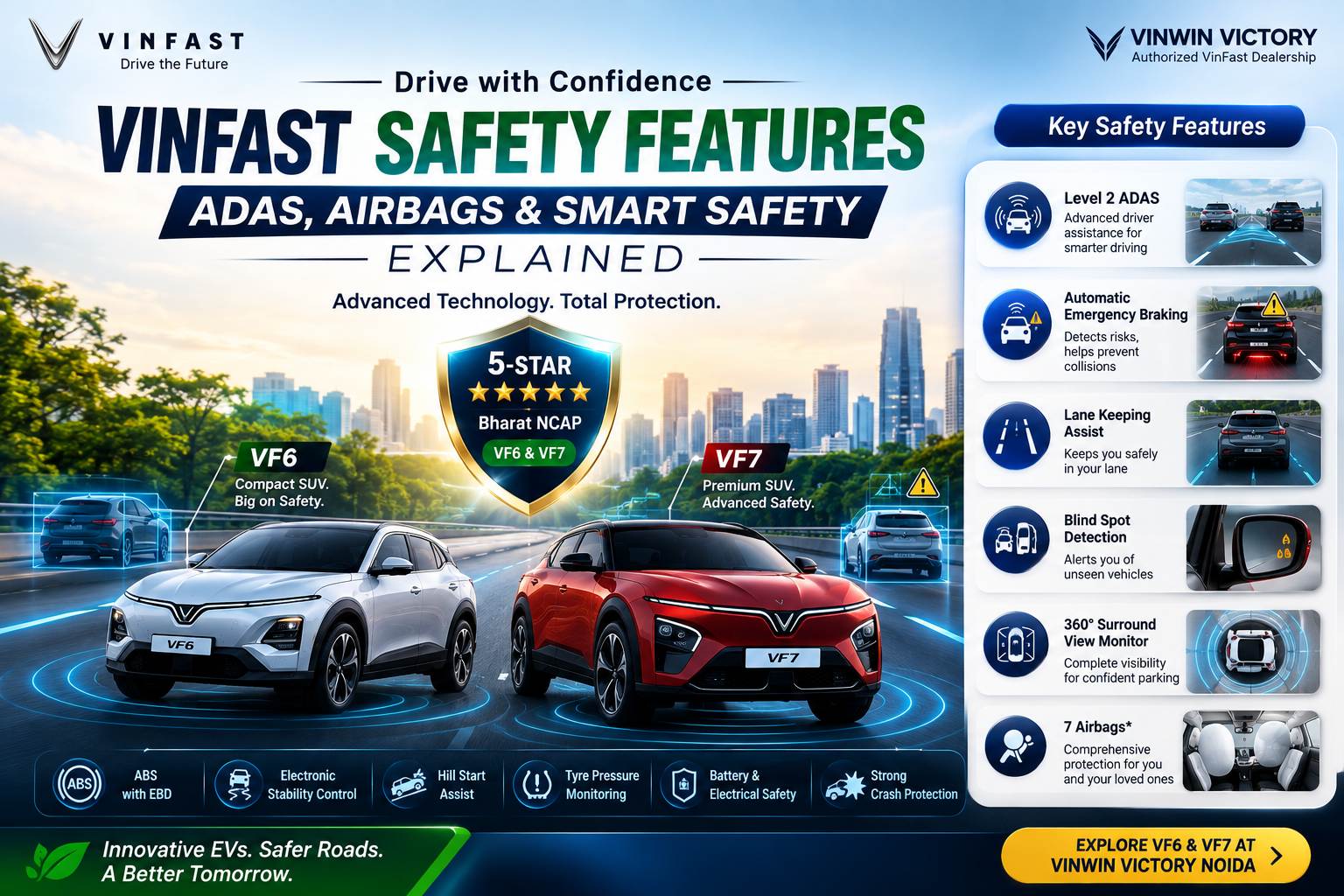
VinFast has a strong safety credential in India. The VF6 and VF7 both received
5-star Bharat NCAP ratings in January 2026. The VF6 scored 27.13/32 for Adult Occupant Protection and 44.41/49 for Child Occupant Protection. The VF7 scored 28.54/32 and 45.25/49 respectively.
Both models also offer seven airbags and variant-dependent Level 2 ADAS features.
For a buyer, these results provide an important reference when comparing safety.
12. Electric SUV vs Petrol SUV: Environmental Impact
An electric SUV does not produce tailpipe emissions while driving.
That makes EVs an important part of the transition toward cleaner mobility. However, the overall environmental impact of an EV also depends on factors such as electricity generation, battery manufacturing, and vehicle production.
Petrol SUVs, meanwhile, burn fuel during operation and produce tailpipe emissions.
Therefore, the environmental comparison is more complex than simply looking at the vehicle’s exhaust.
For buyers who want to reduce tailpipe emissions during everyday driving, an electric SUV can be an attractive option.
13. Which Is Better for Daily Commuting?
For regular city commuting, an electric SUV can be a strong choice when home or workplace charging is available.
Consider an electric SUV if you:
- Drive regularly in the city
- Have convenient charging access
- Want smooth and quiet performance
- Prefer lower day-to-day energy costs
- Like connected technology
- Want to reduce tailpipe emissions
On the other hand, a petrol SUV may be more convenient if you frequently travel without predictable charging access.
Ultimately, your daily routine matters more than a simple EV-versus-petrol label.
14. Which Is Better for Long Road Trips?
Petrol SUVs still have an advantage in refuelling convenience.
Fuel stations are widespread, and a petrol vehicle can generally be refuelled quickly.
An electric SUV requires more planning. However, the growing charging network and faster charging technology are improving the long-distance EV experience.
For an EV road trip, remember to:
- Plan charging stops before departure.
- Check charger availability.
- Keep sufficient battery charge before entering long highway stretches.
- Allow time for charging.
- Keep an alternative charging location in mind where practical.
With these habits, long-distance EV travel can become much easier.
15. VinFast VF6 vs Petrol SUV
The
VinFast VF6 is a compact five-seat electric SUV aimed at buyers who want a modern and practical EV.
The current Indian specification includes a 59.6 kWh usable battery, CCS2 charging, up to 100 kW DC charging, and an ARAI-certified range of up to 468 km for the applicable configuration.
Compared with a conventional petrol SUV, the VF6 offers the advantages of electric driving, home charging, quiet operation, and reduced dependence on petrol.
It is especially worth considering if your daily usage is primarily urban and you have reliable charging access.
Explore the VinFast VF6
16. VinFast VF7 vs Petrol SUV
The
VinFast VF7 takes the electric SUV experience into a larger and more premium format.
The current Indian range includes multiple configurations. Depending on the version, buyers can get different battery capacities, power outputs, drivetrains, and range figures. The official specifications list up to 70 kWh battery capacity, 260 kW peak power, 500 Nm peak torque, and 510 km range for the applicable AWD configuration.
The VF7 can therefore appeal to buyers who want:
- A larger electric SUV
- Strong performance
- Premium technology
- More cabin space
- Advanced driver assistance
- A refined driving experience
Explore the VinFast VF7
Electric SUV vs Petrol SUV: Quick Comparison
| Feature |
Electric SUV |
Petrol SUV |
| Energy |
Electricity |
Petrol |
| Home Energy Option |
Yes |
No |
| Refuelling Time |
Longer |
Usually shorter |
| Daily Energy Cost |
Can be lower |
Depends on fuel price and mileage |
| Engine Oil |
Not required |
Required |
| Driving Experience |
Quiet and smooth |
Conventional engine feel |
| Long Trips |
Requires charging planning |
Easy fuel-stop planning |
| Tailpipe Emissions |
None while driving |
Yes |
| Charging Infrastructure |
Growing |
Extensive fuel network |
| Maintenance |
Different, with fewer conventional powertrain items |
Conventional engine maintenance |
Actual costs and ownership experience vary by vehicle, driving pattern, electricity or fuel prices, and local infrastructure.
Who Should Buy an Electric SUV?
An electric SUV may be the right choice if your lifestyle matches its strengths.
Consider making the switch if you:
- Drive regularly in cities
- Have home or workplace charging
- Want smooth and quiet performance
- Prefer electric technology
- Want to reduce petrol dependency
- Expect to keep your vehicle for several years
Furthermore, people with predictable daily driving patterns can often plan charging very easily.
Who Should Consider a Petrol SUV?
A petrol SUV may still make sense for certain buyers.
It can be suitable if you:
- Frequently travel long distances
- Do not have convenient charging access
- Prefer quick refuelling
- Regularly drive through areas with limited charging infrastructure
- Want a familiar petrol ownership experience
The important point is that there is no universal answer.
Your lifestyle should determine your choice.
Is an Electric SUV Worth Buying in India?
For many buyers, the answer can be
yes.
India’s EV ecosystem is developing, charging infrastructure is expanding, and manufacturers are offering vehicles with longer range, faster charging, advanced technology, and improved safety.
VinFast has also established an India-focused EV ecosystem covering local manufacturing, retail, charging infrastructure, and after-sales services.
However, you should still evaluate your own driving requirements before making a purchase.
Ask yourself:
- How many kilometres do I drive each day?
- Can I charge at home?
- How often do I travel long distances?
- Do I have access to public chargers?
- What type of SUV do I need?
- What is my long-term ownership plan?
These questions will help you make a more practical decision.
Frequently Asked Questions
Is an electric SUV cheaper to run than a petrol SUV?
An electric SUV can have lower energy costs, particularly when it is charged at home. However, actual savings depend on electricity prices, petrol prices, vehicle efficiency, charging losses, and driving distance.
Is an electric SUV good for city driving?
Yes. Smooth acceleration, quiet operation, regenerative braking, and home charging can make an EV particularly convenient for regular urban driving.
Are petrol SUVs better for long-distance travel?
Petrol SUVs can be more convenient for long trips because fuel stations are widespread and refuelling is generally quick. However, electric SUVs can also handle long journeys with proper charging planning.
Does an electric SUV require maintenance?
Yes. EVs still require regular maintenance. However, their powertrain is different from a petrol vehicle, so some traditional engine-related maintenance does not apply.
Is the VinFast VF6 a good electric SUV for city use?
The VF6 is a compact five-seat electric SUV designed for everyday use. Its current Indian specifications include a 59.6 kWh battery and up to 468 km ARAI-certified range for the applicable configuration.
Is the VinFast VF7 suitable for families?
The VF7 is a larger five-seat electric SUV with a 2,840 mm wheelbase and a 537-litre boot according to VinFast’s current specifications. It can therefore be an attractive option for families seeking additional space and premium features.
Are the VinFast VF6 and VF7 safe?
Yes. Both models received 5-star Bharat NCAP safety ratings in 2026. They also offer seven airbags and variant-dependent ADAS features.
Final Verdict: Electric SUV or Petrol SUV?
The
electric SUV vs petrol SUV decision ultimately comes down to your lifestyle.
If you have convenient charging access, drive regularly in the city, value quiet performance, and want to move toward electric mobility, an electric SUV can be an excellent choice.
However, if you frequently travel long distances through areas with limited charging infrastructure and want quick refuelling, a petrol SUV may still be more convenient.
For buyers considering an electric SUV, the VinFast VF6 and VF7 offer two different approaches to premium electric mobility. The VF6 focuses on compact everyday practicality, while the VF7 offers a larger SUV experience with stronger performance options and advanced technology.
The best choice is not simply about
EV vs petrol. Instead, it is about finding the vehicle that fits your driving pattern, charging access, family needs, and long-term ownership goals.
Explore VinFast Electric SUVs in Noida
Thinking about switching from petrol to electric?
Visit
VinWin Victory, your authorized VinFast dealership in Noida, and explore the latest VinFast electric SUVs.
You can:
- Compare the VF6 and VF7
- Explore features and technology
- Understand charging options
- Experience the vehicles during a test drive
- Discuss finance and ownership options
- Get guidance based on your driving requirements
Visit VinWin Victory
Ready to experience an electric SUV?
Contact VinWin Victory